




- BHT
- 15

 33
33
 0
0
Flare (FLR) has quietly grown from an airdrop narrative into a serious Layer 1 focused on data, interoperability and real-world use cases. If you are watching the next crypto bull run and hunting for the next crypto to explode, this is one project you should understand properly before deciding whether it is the best crypto to buy now.

Flare is a Layer 1 blockchain built on the Ethereum Virtual Machine that focuses on bringing high-quality external data on-chain in a decentralized way. In simple terms, it aims to be a data and interoperability hub that allows different blockchains and even Web2 systems to communicate securely and trust-minimized.
Its native token, FLR, powers the network through transaction fees, staking, collateral and governance. Flare's design lets developers plug real-world and cross-chain data directly into smart contracts, opening the door for more advanced DeFi, gaming, prediction markets and enterprise integrations.
Flare was created to solve one of the biggest limitations in crypto: Most blockchains are siloed, with very limited, often centralized access to external data. By building data connectivity and interoperability directly into the base layer, Flare wants to make blockchain applications more useful, safer and easier to scale to mainstream users.
Instead of relying on a small set of centralized oracles, Flare distributes data provision and incentives across the network, aiming to reduce single points of failure and manipulation risk. This focus aligns strongly with what many investors expect from the next crypto bull run: Real utility, strong infrastructure and clear use cases beyond speculation.
Flare is compatible with Ethereum, meaning developers can write and deploy smart contracts in Solidity while benefiting from Flare's unique data architecture. Underneath, the network uses a consensus design inspired by Federated Byzantine Agreement, optimized for security and energy efficiency rather than heavy proof-of-work mining.
Two native protocols make Flare stand out. The State Connector is used to verify events from other blockchains and even certain Web2 systems on-chain, while the Flare Time Series Oracle (FTSO) delivers decentralized price and data feeds. Together, they allow applications on Flare to access reliable, trust-minimized external data without needing centralized bridges or oracles.
The State Connector is Flare's way of securely checking what is happening on other chains or external systems and then proving it inside Flare smart contracts. For example, it can verify whether a transaction actually occurred on another blockchain or whether a particular state (like ownership or balance) is valid, without relying on a single custodian.
Participants lock value and are incentivized to report correct information, while incorrect claims are financially punished. This mechanism is designed to enable safer cross-chain bridges, synthetic assets and advanced interoperability use cases that many see as key themes in the coming bull run crypto narratives.
The Flare Time Series Oracle (FTSO) is the system that supplies continuous data feeds such as token prices to applications on the network. Data providers submit their values, and the protocol aggregates them in a way that rewards accuracy and penalizes outliers, thereby reducing manipulation incentives.
Holders can delegate wrapped FLR (WFLR) to preferred data providers, sharing in the rewards generated by correct data submissions. This turns FLR into a productive asset and creates a native yield opportunity tied directly to the quality of market data that DeFi and other applications depend on.
FLR is the native token of the Flare Network, used to pay transaction fees, stake for validation and secure various network operations. It also acts as collateral in some applications and can be wrapped into WFLR to participate in FTSO delegation and governance.
FLR has a very large maximum supply, initially around 100 billion tokens, with distributions taking place over a long period through mechanisms such as airdrops and rewards. This high supply means the nominal price per coin can appear low, which attracts some best cheap crypto to buy now narratives, but long-term performance depends more on adoption and token economics than on unit price.
The most direct utility for FLR is paying gas fees and participating in staking or validation. Beyond that, FLR and WFLR are used for FTSO delegation, where token holders help secure decentralized data feeds and earn rewards for accurate data.
As the ecosystem grows, developers can use FLR as collateral in DeFi, for cross-chain products and to bootstrap liquidity for applications built on Flare. Governance rights also allow long-term holders to vote on protocol upgrades, data economics and ecosystem parameters.
Flare started by targeting communities around cryptocurrencies that lacked native smart contracts, including XRP, Litecoin, Dogecoin and others. For example, FXRP represents XRP brought trustlessly into Flare so users can access DeFi and other smart-contract features while still being backed by native XRP.
Over time, the ecosystem has expanded with more dApps, bridges and DeFi projects integrating Flare's data infrastructure. Exchanges and wallets have listed and supported FLR, providing liquidity and access for both speculators and long-term builders.
Every crypto bull run brings a few themes that capture attention: Interoperability, real-world assets, yield, security and data are strong contenders for the next cycle. Flare sits right at the intersection of these narratives by focusing on secure cross-chain value transfer and decentralized access to external data.
If the next crypto to explode is driven by infrastructure that makes other applications safer and more powerful, then networks like Flare can benefit indirectly from the growth of the entire ecosystem. However, bull markets also bring hype, so separating real adoption from marketing will be critical when deciding which projects truly count as the best crypto to buy now.
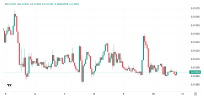
From a unit-price perspective, FLR currently trades in the low cent range, which makes it appear like a cheap crypto compared with blue chips such as BTC or ETH. A low nominal price does not automatically mean undervalued, but it does make position sizing easier for small portfolios during a crypto bull run.
What may appeal to long-term investors is the combination of data infrastructure, interoperability focus and yield through FTSO delegation. On the other hand, the large supply, ongoing distribution and competition from other Layer 1s and oracle providers make FLR a higher-risk, higher-reward bet than established large caps.
Flare competes indirectly with general-purpose Layer 1 networks and directly with projects that provide oracles and cross-chain infrastructure. Unlike some oracle networks that operate as side services, Flare bakes data and interoperability functions directly into its base protocol.
This integrated approach can reduce complexity for developers and potentially increase security if widely adopted. Still, success depends on whether developers choose Flare over existing ecosystems they already know, such as Ethereum, Avalanche or other EVM-compatible chains, and on whether data quality truly proves superior in practice.
Every bear market revives the same question: Is crypto dead. Projects like Flare show that behind the price action there is still ongoing innovation in areas such as interoperability, oracles and secure data integration.
As long as teams are building infrastructure that improves how blockchains interact with each other and the real world, it is difficult to argue the technology itself is dying. However, many tokens will fail, so careful research is necessary before assigning any project the label of next crypto to explode.
The crypto fear and greed index is a simple sentiment gauge that tracks whether the market is deeply fearful or extremely greedy based on volatility, momentum, social media and other factors. Historically, deep fear periods have often offered better long-term entry points for quality projects than peak greed phases.
For a token like FLR, combining technical analysis, on-chain data and sentiment indicators such as the crypto fear and greed index can help avoid buying at emotional extremes. No indicator is perfect, but using sentiment as a risk management tool can be especially useful when looking for the best crypto to buy now during a volatile bull run crypto environment.
High supply and ongoing unlocks can create persistent sell pressure if demand does not grow fast enough. Holders need to monitor distribution schedules, inflation parameters and rewards to understand long-term dilution.
Flare also operates in a very competitive segment, facing pressure from other Layer 1s, cross-chain bridges and oracle networks. Regulatory changes and security incidents in the broader cross-chain ecosystem could also impact sentiment and adoption.
Some investors consider FLR as a high-risk infrastructure play rather than a core holding, allocating only a small percentage of their portfolio. They may stake or delegate to FTSO providers to earn yield while waiting for ecosystem growth.
Others treat FLR as a speculative bet on the future of interoperability and on-chain data, hoping it can become the next crypto to explode during a strong crypto bull run. In both cases, using position sizing, diversification and clear time horizons is essential to manage volatility.
If you decide FLR fits your thesis, start by studying the official documentation, tokenomics and roadmap rather than just focusing on short-term price charts. Then, look at how many live projects are actually using Flare's State Connector and FTSO in production, since real usage is what gives long-term value to any infrastructure token.
You can then choose whether to hold FLR in a spot wallet, participate in FTSO delegation or use it within DeFi applications on Flare-compatible platforms. Always evaluate counterparty risks and smart contract risks when interacting with new protocols.
Flare is not just another smart contract chain chasing generic DeFi hype; it tries to solve a specific, important problem around decentralized data and cross-chain communication. This clear focus gives it a differentiated narrative in any upcoming bull run crypto cycle, especially as investors pay more attention to security and real-world utility.
Whether FLR becomes one of the best crypto to buy now depends largely on your risk tolerance, time horizon and conviction in interoperability as a core theme for the next decade. Thoughtful research, patience and attention to data usage, not only price, will matter more than chasing quick pumps when looking for the next crypto to explode.
If you prefer a more hands-off way to get exposure to market opportunities while you continue learning about projects like Flare, you can follow top-performing traders through Binance copy trading and let their strategies run automatically for you. You can also register on Binance through this link to be eligible for up to 100 USDT in bonuses as part of their current promotions, subject to the platform's terms and conditions.
What is Flare (FLR)
Flare is a Layer 1 blockchain built on the Ethereum Virtual Machine that focuses on bringing high-quality external data on-chain in a decentralized way. In simple terms, it aims to be a data and interoperability hub that allows different blockchains and even Web2 systems to communicate securely and trust-minimized.
Its native token, FLR, powers the network through transaction fees, staking, collateral and governance. Flare's design lets developers plug real-world and cross-chain data directly into smart contracts, opening the door for more advanced DeFi, gaming, prediction markets and enterprise integrations.
Core vision and value proposition
Flare was created to solve one of the biggest limitations in crypto: Most blockchains are siloed, with very limited, often centralized access to external data. By building data connectivity and interoperability directly into the base layer, Flare wants to make blockchain applications more useful, safer and easier to scale to mainstream users.
Instead of relying on a small set of centralized oracles, Flare distributes data provision and incentives across the network, aiming to reduce single points of failure and manipulation risk. This focus aligns strongly with what many investors expect from the next crypto bull run: Real utility, strong infrastructure and clear use cases beyond speculation.
How Flare works under the hood
Flare is compatible with Ethereum, meaning developers can write and deploy smart contracts in Solidity while benefiting from Flare's unique data architecture. Underneath, the network uses a consensus design inspired by Federated Byzantine Agreement, optimized for security and energy efficiency rather than heavy proof-of-work mining.
Two native protocols make Flare stand out. The State Connector is used to verify events from other blockchains and even certain Web2 systems on-chain, while the Flare Time Series Oracle (FTSO) delivers decentralized price and data feeds. Together, they allow applications on Flare to access reliable, trust-minimized external data without needing centralized bridges or oracles.
State Connector explained simply
The State Connector is Flare's way of securely checking what is happening on other chains or external systems and then proving it inside Flare smart contracts. For example, it can verify whether a transaction actually occurred on another blockchain or whether a particular state (like ownership or balance) is valid, without relying on a single custodian.
Participants lock value and are incentivized to report correct information, while incorrect claims are financially punished. This mechanism is designed to enable safer cross-chain bridges, synthetic assets and advanced interoperability use cases that many see as key themes in the coming bull run crypto narratives.
FTSO and decentralized data feeds
The Flare Time Series Oracle (FTSO) is the system that supplies continuous data feeds such as token prices to applications on the network. Data providers submit their values, and the protocol aggregates them in a way that rewards accuracy and penalizes outliers, thereby reducing manipulation incentives.
Holders can delegate wrapped FLR (WFLR) to preferred data providers, sharing in the rewards generated by correct data submissions. This turns FLR into a productive asset and creates a native yield opportunity tied directly to the quality of market data that DeFi and other applications depend on.
FLR token fundamentals
FLR is the native token of the Flare Network, used to pay transaction fees, stake for validation and secure various network operations. It also acts as collateral in some applications and can be wrapped into WFLR to participate in FTSO delegation and governance.
FLR has a very large maximum supply, initially around 100 billion tokens, with distributions taking place over a long period through mechanisms such as airdrops and rewards. This high supply means the nominal price per coin can appear low, which attracts some best cheap crypto to buy now narratives, but long-term performance depends more on adoption and token economics than on unit price.
Utility and use cases
The most direct utility for FLR is paying gas fees and participating in staking or validation. Beyond that, FLR and WFLR are used for FTSO delegation, where token holders help secure decentralized data feeds and earn rewards for accurate data.
As the ecosystem grows, developers can use FLR as collateral in DeFi, for cross-chain products and to bootstrap liquidity for applications built on Flare. Governance rights also allow long-term holders to vote on protocol upgrades, data economics and ecosystem parameters.
Ecosystem and real-world traction
Flare started by targeting communities around cryptocurrencies that lacked native smart contracts, including XRP, Litecoin, Dogecoin and others. For example, FXRP represents XRP brought trustlessly into Flare so users can access DeFi and other smart-contract features while still being backed by native XRP.
Over time, the ecosystem has expanded with more dApps, bridges and DeFi projects integrating Flare's data infrastructure. Exchanges and wallets have listed and supported FLR, providing liquidity and access for both speculators and long-term builders.
Flare and the crypto bull run narrative
Every crypto bull run brings a few themes that capture attention: Interoperability, real-world assets, yield, security and data are strong contenders for the next cycle. Flare sits right at the intersection of these narratives by focusing on secure cross-chain value transfer and decentralized access to external data.
If the next crypto to explode is driven by infrastructure that makes other applications safer and more powerful, then networks like Flare can benefit indirectly from the growth of the entire ecosystem. However, bull markets also bring hype, so separating real adoption from marketing will be critical when deciding which projects truly count as the best crypto to buy now.
Is Flare among the best cheap crypto to buy now
From a unit-price perspective, FLR currently trades in the low cent range, which makes it appear like a cheap crypto compared with blue chips such as BTC or ETH. A low nominal price does not automatically mean undervalued, but it does make position sizing easier for small portfolios during a crypto bull run.
What may appeal to long-term investors is the combination of data infrastructure, interoperability focus and yield through FTSO delegation. On the other hand, the large supply, ongoing distribution and competition from other Layer 1s and oracle providers make FLR a higher-risk, higher-reward bet than established large caps.
Flare versus other Layer 1 and oracle projects
Flare competes indirectly with general-purpose Layer 1 networks and directly with projects that provide oracles and cross-chain infrastructure. Unlike some oracle networks that operate as side services, Flare bakes data and interoperability functions directly into its base protocol.
This integrated approach can reduce complexity for developers and potentially increase security if widely adopted. Still, success depends on whether developers choose Flare over existing ecosystems they already know, such as Ethereum, Avalanche or other EVM-compatible chains, and on whether data quality truly proves superior in practice.
What FLR means for is crypto dead
Every bear market revives the same question: Is crypto dead. Projects like Flare show that behind the price action there is still ongoing innovation in areas such as interoperability, oracles and secure data integration.
As long as teams are building infrastructure that improves how blockchains interact with each other and the real world, it is difficult to argue the technology itself is dying. However, many tokens will fail, so careful research is necessary before assigning any project the label of next crypto to explode.
Crypto fear and greed index and FLR timing
The crypto fear and greed index is a simple sentiment gauge that tracks whether the market is deeply fearful or extremely greedy based on volatility, momentum, social media and other factors. Historically, deep fear periods have often offered better long-term entry points for quality projects than peak greed phases.
For a token like FLR, combining technical analysis, on-chain data and sentiment indicators such as the crypto fear and greed index can help avoid buying at emotional extremes. No indicator is perfect, but using sentiment as a risk management tool can be especially useful when looking for the best crypto to buy now during a volatile bull run crypto environment.
Key risks to consider before buying FLR
High supply and ongoing unlocks can create persistent sell pressure if demand does not grow fast enough. Holders need to monitor distribution schedules, inflation parameters and rewards to understand long-term dilution.
Flare also operates in a very competitive segment, facing pressure from other Layer 1s, cross-chain bridges and oracle networks. Regulatory changes and security incidents in the broader cross-chain ecosystem could also impact sentiment and adoption.
How investors use FLR in a portfolio
Some investors consider FLR as a high-risk infrastructure play rather than a core holding, allocating only a small percentage of their portfolio. They may stake or delegate to FTSO providers to earn yield while waiting for ecosystem growth.
Others treat FLR as a speculative bet on the future of interoperability and on-chain data, hoping it can become the next crypto to explode during a strong crypto bull run. In both cases, using position sizing, diversification and clear time horizons is essential to manage volatility.
Practical steps if you want exposure
If you decide FLR fits your thesis, start by studying the official documentation, tokenomics and roadmap rather than just focusing on short-term price charts. Then, look at how many live projects are actually using Flare's State Connector and FTSO in production, since real usage is what gives long-term value to any infrastructure token.
You can then choose whether to hold FLR in a spot wallet, participate in FTSO delegation or use it within DeFi applications on Flare-compatible platforms. Always evaluate counterparty risks and smart contract risks when interacting with new protocols.
Final thoughts on Flare and the next cycle
Flare is not just another smart contract chain chasing generic DeFi hype; it tries to solve a specific, important problem around decentralized data and cross-chain communication. This clear focus gives it a differentiated narrative in any upcoming bull run crypto cycle, especially as investors pay more attention to security and real-world utility.
Whether FLR becomes one of the best crypto to buy now depends largely on your risk tolerance, time horizon and conviction in interoperability as a core theme for the next decade. Thoughtful research, patience and attention to data usage, not only price, will matter more than chasing quick pumps when looking for the next crypto to explode.
If you prefer a more hands-off way to get exposure to market opportunities while you continue learning about projects like Flare, you can follow top-performing traders through Binance copy trading and let their strategies run automatically for you. You can also register on Binance through this link to be eligible for up to 100 USDT in bonuses as part of their current promotions, subject to the platform's terms and conditions.


