




- BHT
- 14

 61
61
 0
0
The crypto space moves fast, and picking the right project can feel overwhelming. If you're hunting for the best crypto to buy now, you've probably heard whispers about Render Network. This isn't just another token riding the bull run crypto wave-it's solving real problems for creators, AI developers, and anyone needing serious computing power without breaking the bank.

Render Network operates as a decentralized peer-to-peer marketplace that connects content creators needing GPU rendering power with individuals who have unused computing resources. The platform fundamentally transforms how digital content gets rendered by distributing complex computational tasks across a global network of GPU providers rather than relying on expensive centralized cloud services.
The native cryptocurrency RENDER serves as the medium of exchange within this ecosystem. When creators submit rendering jobs, they pay using RENDER tokens, while GPU providers earn RENDER tokens as compensation for contributing their idle computing power. This creates a mutually beneficial economic model where both parties gain value from participating in the network.
The platform supports various applications including 3D rendering for film production, gaming asset creation, artificial intelligence model training, augmented reality development, architectural visualization, and scientific research computing. This versatility positions Render as infrastructure supporting multiple emerging technology sectors rather than serving a single niche market.
The technical architecture of Render Network utilizes blockchain technology to manage content information, track payments, and facilitate smart contracts between users and GPU providers. When a rendering job gets initiated, proprietary assets are hashed and distributed to GPU nodes across the network for processing.
The proof of render system verifies job completion before releasing payments, which remain held in escrow during the rendering process. To safeguard against unauthorized use, rendered assets stay watermarked until payment confirmation occurs. This security mechanism protects intellectual property while ensuring fair compensation for computing providers.
Originally built on Ethereum, Render Network migrated to Solana to enhance transaction speed and minimize costs. This strategic move allowed the platform to handle higher transaction volumes more efficiently while reducing fees for users. The blockchain integration ensures transparency in all transactions while maintaining immutable records of content ownership and usage rights.
In 2025, Render launched the Render Compute Network (RCN), significantly broadening its capabilities beyond traditional rendering tasks. This expansion enables the platform to support AI workloads including model training and inference, positioning Render at the intersection of decentralized computing and artificial intelligence development.
This evolution reflects growing market demand as AI applications require massive computational resources that traditional cloud providers supply at premium prices. By leveraging decentralized GPU networks, developers and researchers can access the computing power they need at more competitive rates while GPU owners monetize hardware that would otherwise sit idle.
The RCN expansion demonstrates how Render adapts to technological trends and market needs. Rather than remaining limited to graphics rendering, the platform evolves into comprehensive decentralized computing infrastructure supporting various computational workloads across multiple industries.
Render provides universal access to GPU computing resources without requiring significant upfront hardware investments. Creators and developers can tap into virtually unlimited GPU power through the decentralized model, scaling their projects according to demand rather than being constrained by local hardware limitations.
The platform integrates seamlessly with popular 3D design applications including Blender and Cinema 4D. This compatibility eliminates friction for creators already working within established workflows, allowing them to leverage decentralized rendering without learning new software or adapting their creative processes.
GPU owners benefit by monetizing idle computing resources that generate no value when unused. Rather than letting graphics cards sit dormant between gaming sessions or personal projects, individuals can contribute their GPU power to the network and earn RENDER tokens as passive income.
Cost efficiency represents another significant advantage as Render presents a more affordable alternative to centralized cloud computing services. Traditional rendering farms and cloud GPU services charge premium rates, whereas the decentralized marketplace creates competitive pricing through supply and demand dynamics.
RENDER functions as a service token specifically designed to compensate GPU owners for rendering services and facilitate transactions within the network. The token serves multiple purposes including payment for computational services, governance participation, and network incentive alignment.
Token holders can submit and vote on development proposals, giving the community voice in how the network evolves. This governance mechanism ensures that Render develops according to user needs rather than being controlled by a centralized authority making unilateral decisions.
The token-based economy creates clear economic incentives encouraging both demand-side users who need rendering services and supply-side providers who contribute GPU resources. As network usage grows, demand for RENDER tokens increases, creating potential value appreciation for holders while ensuring adequate compensation for service providers.
Quality assurance mechanisms ensure rendered outputs meet standards before releasing funds to GPU providers. This quality control protects users from receiving substandard work while maintaining high service standards across the network.
When evaluating whether Render qualifies as the best cheap crypto to buy now, several factors merit consideration beyond just token price. Current trading around $1.59-1.92 USD positions RENDER as relatively affordable compared to established cryptocurrencies, making it accessible for investors with limited capital.
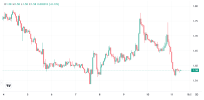
The fundamental value proposition of solving real problems for creators and AI developers distinguishes Render from speculative projects lacking practical utility. As demand for GPU computing grows alongside AI advancement and metaverse development, platforms providing decentralized access to computational resources gain strategic importance.
Market performance during crypto bull run periods depends on multiple variables including overall market sentiment reflected in metrics like the crypto fear and greed index, technological developments within the network, partnership announcements, and broader adoption by creators and developers. While past performance never guarantees future results, projects with genuine utility tend to maintain relevance across market cycles.
Questions about is crypto dead resurface during market downturns, yet projects building real infrastructure continue developing regardless of price volatility. Render's expansion into AI computing demonstrates ongoing innovation rather than stagnation, suggesting long-term viability beyond short-term price movements.
Identifying the next crypto to explode requires analyzing fundamental factors including market demand, technological innovation, competitive positioning, and adoption trends. Render operates at the convergence of several high-growth sectors including AI, metaverse development, gaming, and digital content creation.
The global rendering market continues expanding as content creation democratizes and quality expectations increase across industries. Traditional centralized services struggle to scale affordably, creating opportunities for decentralized alternatives offering competitive pricing and flexible capacity.
Strategic partnerships and integrations with major platforms could accelerate adoption significantly. As more creators discover the cost savings and scalability benefits of decentralized GPU networks, network effects could drive exponential growth in both usage and token value.
However, investors should recognize that explosive growth never comes guaranteed regardless of how promising a project appears. Market dynamics remain unpredictable, competition exists from other decentralized computing networks, and technological or regulatory challenges could emerge unexpectedly.
Like all cryptocurrency investments, Render carries inherent risks that potential investors must understand before committing capital. Price volatility characterizes crypto markets, with dramatic swings occurring based on market sentiment, regulatory news, or technological developments.
Competition from other decentralized computing networks and traditional cloud providers presents ongoing challenges. Major technology companies possess significant resources and established customer relationships that could make market penetration difficult for decentralized alternatives.
Technology risks include potential security vulnerabilities, scalability limitations as the network grows, or issues with the proof of render verification system. While blockchain technology provides certain security advantages, no system remains completely immune to attacks or technical failures.
Regulatory uncertainty affects all cryptocurrency projects as governments worldwide continue developing frameworks for digital assets. Changes in regulatory treatment could impact token utility, exchange listings, or overall project viability depending on jurisdictional requirements.
During crypto bull run phases, projects with strong fundamentals and practical utility tend to attract sustained attention beyond pure speculation. Render's focus on solving real computational challenges positions it favorably compared to projects lacking clear value propositions.
Bull run crypto momentum often follows Bitcoin and Ethereum trends, with altcoins experiencing amplified movements in both directions. Understanding this dynamic helps investors manage expectations and risk appropriately when considering positions in projects like Render.
Market cycles influenced by factors including institutional adoption, regulatory developments, macroeconomic conditions, and technological breakthroughs affect all cryptocurrencies. Monitoring the crypto fear and greed index provides insight into overall market sentiment that influences short-term price movements across the entire sector.
Projects that continue building and innovating during bear markets often emerge stronger when bullish sentiment returns. Render's ongoing development including the RCN expansion demonstrates commitment to long-term vision rather than focusing solely on token price performance.
For those interested in participating in the Render ecosystem, multiple entry points exist depending on individual goals and resources. Investors can acquire RENDER tokens through major cryptocurrency exchanges including Binance , Kraken , and Coinbase to gain exposure to potential value appreciation.
GPU owners can contribute computing resources to the network and earn RENDER tokens as compensation for providing rendering services. This approach allows individuals to monetize existing hardware while supporting the decentralized infrastructure.
Creators and developers can utilize the network for rendering projects at competitive rates compared to traditional services. By paying with RENDER tokens, users access scalable GPU power without investing in expensive local hardware.
Understanding how to evaluate projects using both fundamental analysis of technology and utility alongside market metrics helps make informed decisions. Rather than chasing price movements based on hype, successful crypto investing typically involves identifying genuinely useful projects with sustainable long-term value propositions.
Render Network represents compelling infrastructure addressing real computational challenges facing creators, AI developers, and various industries requiring GPU resources. The decentralized approach democratizes access to expensive computing power while creating earning opportunities for GPU owners.
Whether Render qualifies as the best crypto to buy now depends on individual investment goals, risk tolerance, and market outlook. The project demonstrates genuine utility and continued innovation, factors that historically support long-term viability regardless of short-term price volatility.
Understanding Render Network and Its Purpose
Render Network operates as a decentralized peer-to-peer marketplace that connects content creators needing GPU rendering power with individuals who have unused computing resources. The platform fundamentally transforms how digital content gets rendered by distributing complex computational tasks across a global network of GPU providers rather than relying on expensive centralized cloud services.
The native cryptocurrency RENDER serves as the medium of exchange within this ecosystem. When creators submit rendering jobs, they pay using RENDER tokens, while GPU providers earn RENDER tokens as compensation for contributing their idle computing power. This creates a mutually beneficial economic model where both parties gain value from participating in the network.
The platform supports various applications including 3D rendering for film production, gaming asset creation, artificial intelligence model training, augmented reality development, architectural visualization, and scientific research computing. This versatility positions Render as infrastructure supporting multiple emerging technology sectors rather than serving a single niche market.
How Render Network Technology Works
The technical architecture of Render Network utilizes blockchain technology to manage content information, track payments, and facilitate smart contracts between users and GPU providers. When a rendering job gets initiated, proprietary assets are hashed and distributed to GPU nodes across the network for processing.
The proof of render system verifies job completion before releasing payments, which remain held in escrow during the rendering process. To safeguard against unauthorized use, rendered assets stay watermarked until payment confirmation occurs. This security mechanism protects intellectual property while ensuring fair compensation for computing providers.
Originally built on Ethereum, Render Network migrated to Solana to enhance transaction speed and minimize costs. This strategic move allowed the platform to handle higher transaction volumes more efficiently while reducing fees for users. The blockchain integration ensures transparency in all transactions while maintaining immutable records of content ownership and usage rights.
The Evolution to Render Compute Network
In 2025, Render launched the Render Compute Network (RCN), significantly broadening its capabilities beyond traditional rendering tasks. This expansion enables the platform to support AI workloads including model training and inference, positioning Render at the intersection of decentralized computing and artificial intelligence development.
This evolution reflects growing market demand as AI applications require massive computational resources that traditional cloud providers supply at premium prices. By leveraging decentralized GPU networks, developers and researchers can access the computing power they need at more competitive rates while GPU owners monetize hardware that would otherwise sit idle.
The RCN expansion demonstrates how Render adapts to technological trends and market needs. Rather than remaining limited to graphics rendering, the platform evolves into comprehensive decentralized computing infrastructure supporting various computational workloads across multiple industries.
Key Advantages of Render Network
Render provides universal access to GPU computing resources without requiring significant upfront hardware investments. Creators and developers can tap into virtually unlimited GPU power through the decentralized model, scaling their projects according to demand rather than being constrained by local hardware limitations.
The platform integrates seamlessly with popular 3D design applications including Blender and Cinema 4D. This compatibility eliminates friction for creators already working within established workflows, allowing them to leverage decentralized rendering without learning new software or adapting their creative processes.
GPU owners benefit by monetizing idle computing resources that generate no value when unused. Rather than letting graphics cards sit dormant between gaming sessions or personal projects, individuals can contribute their GPU power to the network and earn RENDER tokens as passive income.
Cost efficiency represents another significant advantage as Render presents a more affordable alternative to centralized cloud computing services. Traditional rendering farms and cloud GPU services charge premium rates, whereas the decentralized marketplace creates competitive pricing through supply and demand dynamics.
RENDER Token Economics and Utility
RENDER functions as a service token specifically designed to compensate GPU owners for rendering services and facilitate transactions within the network. The token serves multiple purposes including payment for computational services, governance participation, and network incentive alignment.
Token holders can submit and vote on development proposals, giving the community voice in how the network evolves. This governance mechanism ensures that Render develops according to user needs rather than being controlled by a centralized authority making unilateral decisions.
The token-based economy creates clear economic incentives encouraging both demand-side users who need rendering services and supply-side providers who contribute GPU resources. As network usage grows, demand for RENDER tokens increases, creating potential value appreciation for holders while ensuring adequate compensation for service providers.
Quality assurance mechanisms ensure rendered outputs meet standards before releasing funds to GPU providers. This quality control protects users from receiving substandard work while maintaining high service standards across the network.
Is Render the Best Cheap Crypto to Buy Now
When evaluating whether Render qualifies as the best cheap crypto to buy now, several factors merit consideration beyond just token price. Current trading around $1.59-1.92 USD positions RENDER as relatively affordable compared to established cryptocurrencies, making it accessible for investors with limited capital.
The fundamental value proposition of solving real problems for creators and AI developers distinguishes Render from speculative projects lacking practical utility. As demand for GPU computing grows alongside AI advancement and metaverse development, platforms providing decentralized access to computational resources gain strategic importance.
Market performance during crypto bull run periods depends on multiple variables including overall market sentiment reflected in metrics like the crypto fear and greed index, technological developments within the network, partnership announcements, and broader adoption by creators and developers. While past performance never guarantees future results, projects with genuine utility tend to maintain relevance across market cycles.
Questions about is crypto dead resurface during market downturns, yet projects building real infrastructure continue developing regardless of price volatility. Render's expansion into AI computing demonstrates ongoing innovation rather than stagnation, suggesting long-term viability beyond short-term price movements.
Potential as the Next Crypto to Explode
Identifying the next crypto to explode requires analyzing fundamental factors including market demand, technological innovation, competitive positioning, and adoption trends. Render operates at the convergence of several high-growth sectors including AI, metaverse development, gaming, and digital content creation.
The global rendering market continues expanding as content creation democratizes and quality expectations increase across industries. Traditional centralized services struggle to scale affordably, creating opportunities for decentralized alternatives offering competitive pricing and flexible capacity.
Strategic partnerships and integrations with major platforms could accelerate adoption significantly. As more creators discover the cost savings and scalability benefits of decentralized GPU networks, network effects could drive exponential growth in both usage and token value.
However, investors should recognize that explosive growth never comes guaranteed regardless of how promising a project appears. Market dynamics remain unpredictable, competition exists from other decentralized computing networks, and technological or regulatory challenges could emerge unexpectedly.
Risks and Considerations
Like all cryptocurrency investments, Render carries inherent risks that potential investors must understand before committing capital. Price volatility characterizes crypto markets, with dramatic swings occurring based on market sentiment, regulatory news, or technological developments.
Competition from other decentralized computing networks and traditional cloud providers presents ongoing challenges. Major technology companies possess significant resources and established customer relationships that could make market penetration difficult for decentralized alternatives.
Technology risks include potential security vulnerabilities, scalability limitations as the network grows, or issues with the proof of render verification system. While blockchain technology provides certain security advantages, no system remains completely immune to attacks or technical failures.
Regulatory uncertainty affects all cryptocurrency projects as governments worldwide continue developing frameworks for digital assets. Changes in regulatory treatment could impact token utility, exchange listings, or overall project viability depending on jurisdictional requirements.
Positioning Within Bull Run Crypto Trends
During crypto bull run phases, projects with strong fundamentals and practical utility tend to attract sustained attention beyond pure speculation. Render's focus on solving real computational challenges positions it favorably compared to projects lacking clear value propositions.
Bull run crypto momentum often follows Bitcoin and Ethereum trends, with altcoins experiencing amplified movements in both directions. Understanding this dynamic helps investors manage expectations and risk appropriately when considering positions in projects like Render.
Market cycles influenced by factors including institutional adoption, regulatory developments, macroeconomic conditions, and technological breakthroughs affect all cryptocurrencies. Monitoring the crypto fear and greed index provides insight into overall market sentiment that influences short-term price movements across the entire sector.
Projects that continue building and innovating during bear markets often emerge stronger when bullish sentiment returns. Render's ongoing development including the RCN expansion demonstrates commitment to long-term vision rather than focusing solely on token price performance.
Getting Started with Render
For those interested in participating in the Render ecosystem, multiple entry points exist depending on individual goals and resources. Investors can acquire RENDER tokens through major cryptocurrency exchanges including Binance , Kraken , and Coinbase to gain exposure to potential value appreciation.
GPU owners can contribute computing resources to the network and earn RENDER tokens as compensation for providing rendering services. This approach allows individuals to monetize existing hardware while supporting the decentralized infrastructure.
Creators and developers can utilize the network for rendering projects at competitive rates compared to traditional services. By paying with RENDER tokens, users access scalable GPU power without investing in expensive local hardware.
Understanding how to evaluate projects using both fundamental analysis of technology and utility alongside market metrics helps make informed decisions. Rather than chasing price movements based on hype, successful crypto investing typically involves identifying genuinely useful projects with sustainable long-term value propositions.
Final Thoughts
Render Network represents compelling infrastructure addressing real computational challenges facing creators, AI developers, and various industries requiring GPU resources. The decentralized approach democratizes access to expensive computing power while creating earning opportunities for GPU owners.
Whether Render qualifies as the best crypto to buy now depends on individual investment goals, risk tolerance, and market outlook. The project demonstrates genuine utility and continued innovation, factors that historically support long-term viability regardless of short-term price volatility.


