




- BHT
- 6

 6
6
 0
0
The crypto landscape is shifting beneath our feet. While many wonder if crypto is dead, a quiet revolution is happening at the intersection of artificial intelligence and blockchain. Bittensor isn't just another token-it's building the infrastructure for decentralized AI that could reshape how we think about machine learning forever.

Bittensor is an open-source protocol that powers a decentralized, blockchain-based machine learning network. Unlike traditional AI systems controlled by tech giants, Bittensor creates a marketplace where artificial intelligence operates without centralized control, allowing machine learning models to train collaboratively across a global network.
The protocol addresses a critical problem in today's AI landscape: The monopolization of machine learning resources by large corporations. By leveraging blockchain technology, Bittensor enables anyone, anywhere to contribute to and benefit from collective machine intelligence. This democratization of AI infrastructure positions it uniquely in the current market, especially as investors search for the best crypto to buy now during periods of technological transformation.
TAO serves as the native cryptocurrency that fuels this entire ecosystem. The token incentivizes participants to contribute valuable AI models and computational resources while granting access to the network's collective intelligence. With a capped supply of 21 million tokens-mirroring Bitcoin's scarcity model-TAO has attracted significant attention from those seeking the next crypto to explode.
Bittensor employs a unique consensus mechanism called Proof of Intelligence, which rewards network participants based on the value of their machine learning contributions rather than computational power alone. Nodes demonstrate their intelligence by performing machine learning tasks, with more accurate and valuable outputs receiving higher rewards in TAO tokens.
This approach fundamentally differs from traditional Proof of Work or Proof of Stake systems. Instead of solving arbitrary mathematical problems, participants must produce genuinely useful AI outputs, creating real-world value with every block.
The network operates through specialized subnets, each focusing on specific AI tasks or applications. As of early 2025, Bittensor has deployed over 70 subnets, with plans to expand to more than 200 in the near future. Each subnet functions as an independent marketplace where miners and validators collaborate on particular machine learning challenges.
Miners process queries and generate AI outputs while validators assess the quality of these contributions. The Yuma Consensus algorithm calculates rewards based on performance, with updates occurring every 12 seconds to ensure real-time accuracy. All activities are recorded on Bittensor's blockchain, called Subtensor, maintaining transparency and immutability.
Three key roles drive the Bittensor ecosystem:
Miners contribute computational power and innovative neural networks to solve AI tasks
Validators stake TAO tokens to secure the network by evaluating miner outputs and ensuring quality
Developers build AI services by combining resources from multiple subnets and monetizing their applications
This collaborative structure enables developers to create sophisticated AI applications without building everything from scratch. They can leverage existing subnet services, pay fees in TAO, and generate revenue from end users-creating a complete AI marketplace economy.
TAO maintains a maximum supply of 21 million tokens, distributed through mining and validation rewards. The protocol currently produces one TAO per block, split equally between miners and validators. This emission rate creates approximately 7, 200 TAO daily as of late 2024, though this amount will halve to 3, 600 TAO per day following the first halving event.
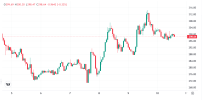
The halving mechanism mirrors Bitcoin's deflationary model, reducing annual token production over time until reaching the 21 million cap. This scarcity-driven approach appeals to investors monitoring the crypto fear and greed index for entry points into fundamentally sound projects.
TAO serves multiple critical functions within the network. Validators must stake TAO to participate in consensus and earn rewards for securing the blockchain. All network participants pay transaction fees in TAO when registering new AI models, submitting queries to subnets, or performing other protocol functions.
The token also powers decentralized governance, allowing holders to vote on network upgrades, parameter changes, and funding allocations. This governance model ensures the community guides Bittensor's evolution rather than centralized entities making unilateral decisions.
External users access the network's AI capabilities by paying in TAO, creating continuous demand for the token as the ecosystem grows. This utility-driven tokenomics differentiates TAO from purely speculative assets, providing fundamental value beyond price speculation.
As of December 2024, TAO trades around $292-320 USD with a market capitalization exceeding $3.3 billion. The token has demonstrated remarkable resilience during market downturns, posting gains while broader crypto markets declined. In October 2025, TAO surged approximately 35% while the wider market faced selling pressure, highlighting its strength as a potential hedge during volatile periods.
This performance suggests growing investor confidence in decentralized AI as a viable sector. Those researching the best cheap crypto to buy now should note that while TAO's price per token appears high compared to many altcoins, its relatively modest market cap compared to top-tier cryptocurrencies indicates significant growth potential.
The convergence of artificial intelligence and blockchain technology positions Bittensor favorably for the next bull run crypto cycle. As AI continues dominating technological discussions and investment flows, projects offering genuine utility in this space attract both retail and institutional capital.
Bittensor's decentralized approach addresses real concerns about AI monopolization while providing tangible infrastructure for developers and businesses. This combination of timing, technology, and utility creates compelling conditions for sustained growth during favorable market conditions.
Major developments like the dTAO upgrade launched in February 2025 represent significant technical milestones. This upgrade increased decentralization and reduced circulating supply, both positive catalysts for long-term value appreciation.
The dTAO upgrade represents Bittensor's most significant technical advancement, enhancing network decentralization while optimizing token distribution. Implemented in February 2025, this upgrade addressed scalability concerns and refined the incentive mechanisms that drive network participation.
By reducing circulating supply while expanding subnet capabilities, dTAO created favorable supply-demand dynamics. The upgrade also improved how rewards distribute across the network, ensuring fairer compensation for valuable contributions and discouraging low-quality participation.
These technical improvements strengthen Bittensor's competitive position against both centralized AI platforms and other blockchain-based AI projects. The upgrade demonstrates active development and commitment to long-term sustainability rather than short-term token price manipulation.
While projects like Fetch. Ai and Render have gained traction in the AI-crypto space, Bittensor distinguishes itself through deeper decentralization and more robust incentive structures. Its subnet architecture enables specialized AI marketplaces that other protocols struggle to replicate.
The protocol's focus on machine learning collaboration rather than narrow AI applications creates broader utility. This positions TAO as infrastructure for the AI economy rather than a single-use application token, potentially commanding higher valuations as the sector matures.
Grayscale's investment in Bittensor signals institutional recognition of its potential, lending credibility beyond retail speculation. Such backing often precedes broader institutional adoption during crypto bull run periods when risk appetite increases.
Despite its promise, Bittensor faces challenges common to emerging technologies. The protocol's complexity may limit mainstream adoption compared to simpler blockchain applications. Successfully scaling to hundreds of subnets while maintaining performance and security remains an ongoing technical challenge.
Market volatility affects all cryptocurrencies, including TAO. While the project offers strong fundamentals, investors should expect price fluctuations tied to broader crypto market sentiment and the crypto fear and greed index. The relatively high inflation rate from block rewards requires corresponding demand growth to support price appreciation.
Regulatory uncertainty around both cryptocurrency and artificial intelligence could impact Bittensor's development trajectory. Changes in how governments approach decentralized AI networks might affect operational parameters or market access.
For those convinced of Bittensor's potential, participation can take several forms. Investors can acquire TAO tokens through major exchanges and hold them as speculation on the protocol's growth. More technical users might run validators or miners to earn rewards while supporting network security.
Developers can build applications leveraging Bittensor's AI capabilities, creating new revenue streams while contributing to ecosystem expansion. This approach offers exposure beyond token price appreciation, generating income from actual protocol usage.
Staking TAO as a validator requires technical knowledge and capital commitment but provides ongoing rewards from network operations. This strategy suits those seeking yield while maintaining long-term conviction in decentralized AI infrastructure.
Bittensor represents more than a cryptocurrency investment-it embodies a vision for democratized artificial intelligence. As AI increasingly influences every aspect of modern life, questions of control, access, and benefit distribution become critical. Centralized AI platforms concentrate power among a few corporations, raising concerns about bias, censorship, and equitable access.
Decentralized alternatives like Bittensor offer a different path where AI development happens collaboratively, rewards distribute fairly, and no single entity controls the infrastructure. This vision resonates with blockchain's core principles while addressing practical needs in the rapidly evolving AI landscape.
Whether Bittensor achieves its ambitious goals remains to be seen. However, the protocol's technical sophistication, growing ecosystem, and alignment with major technological trends position it as a serious contender in both the crypto and AI spaces. For investors wondering if crypto is dead, projects like Bittensor demonstrate that innovation continues driving the industry forward, creating new opportunities for those willing to research beyond headlines.
The intersection of AI and blockchain is just beginning. Bittensor's early mover advantage in decentralized machine learning could prove invaluable as these technologies mature and converge. Those seeking the next crypto to explode might find that the most promising opportunities lie not in meme coins or speculative tokens, but in infrastructure projects solving real problems at the frontier of technological innovation.
Understanding Bittensor: Decentralized AI Meets Blockchain
Bittensor is an open-source protocol that powers a decentralized, blockchain-based machine learning network. Unlike traditional AI systems controlled by tech giants, Bittensor creates a marketplace where artificial intelligence operates without centralized control, allowing machine learning models to train collaboratively across a global network.
The protocol addresses a critical problem in today's AI landscape: The monopolization of machine learning resources by large corporations. By leveraging blockchain technology, Bittensor enables anyone, anywhere to contribute to and benefit from collective machine intelligence. This democratization of AI infrastructure positions it uniquely in the current market, especially as investors search for the best crypto to buy now during periods of technological transformation.
TAO serves as the native cryptocurrency that fuels this entire ecosystem. The token incentivizes participants to contribute valuable AI models and computational resources while granting access to the network's collective intelligence. With a capped supply of 21 million tokens-mirroring Bitcoin's scarcity model-TAO has attracted significant attention from those seeking the next crypto to explode.
How Bittensor Works: The Technical Architecture
Proof of Intelligence Consensus
Bittensor employs a unique consensus mechanism called Proof of Intelligence, which rewards network participants based on the value of their machine learning contributions rather than computational power alone. Nodes demonstrate their intelligence by performing machine learning tasks, with more accurate and valuable outputs receiving higher rewards in TAO tokens.
This approach fundamentally differs from traditional Proof of Work or Proof of Stake systems. Instead of solving arbitrary mathematical problems, participants must produce genuinely useful AI outputs, creating real-world value with every block.
The Subnet System
The network operates through specialized subnets, each focusing on specific AI tasks or applications. As of early 2025, Bittensor has deployed over 70 subnets, with plans to expand to more than 200 in the near future. Each subnet functions as an independent marketplace where miners and validators collaborate on particular machine learning challenges.
Miners process queries and generate AI outputs while validators assess the quality of these contributions. The Yuma Consensus algorithm calculates rewards based on performance, with updates occurring every 12 seconds to ensure real-time accuracy. All activities are recorded on Bittensor's blockchain, called Subtensor, maintaining transparency and immutability.
Network Participants
Three key roles drive the Bittensor ecosystem:
Miners contribute computational power and innovative neural networks to solve AI tasks
Validators stake TAO tokens to secure the network by evaluating miner outputs and ensuring quality
Developers build AI services by combining resources from multiple subnets and monetizing their applications
This collaborative structure enables developers to create sophisticated AI applications without building everything from scratch. They can leverage existing subnet services, pay fees in TAO, and generate revenue from end users-creating a complete AI marketplace economy.
TAO Token Economics and Distribution
Supply and Emission
TAO maintains a maximum supply of 21 million tokens, distributed through mining and validation rewards. The protocol currently produces one TAO per block, split equally between miners and validators. This emission rate creates approximately 7, 200 TAO daily as of late 2024, though this amount will halve to 3, 600 TAO per day following the first halving event.
The halving mechanism mirrors Bitcoin's deflationary model, reducing annual token production over time until reaching the 21 million cap. This scarcity-driven approach appeals to investors monitoring the crypto fear and greed index for entry points into fundamentally sound projects.
Token Utility
TAO serves multiple critical functions within the network. Validators must stake TAO to participate in consensus and earn rewards for securing the blockchain. All network participants pay transaction fees in TAO when registering new AI models, submitting queries to subnets, or performing other protocol functions.
The token also powers decentralized governance, allowing holders to vote on network upgrades, parameter changes, and funding allocations. This governance model ensures the community guides Bittensor's evolution rather than centralized entities making unilateral decisions.
External users access the network's AI capabilities by paying in TAO, creating continuous demand for the token as the ecosystem grows. This utility-driven tokenomics differentiates TAO from purely speculative assets, providing fundamental value beyond price speculation.
Market Performance and Investment Potential
Current Valuation
As of December 2024, TAO trades around $292-320 USD with a market capitalization exceeding $3.3 billion. The token has demonstrated remarkable resilience during market downturns, posting gains while broader crypto markets declined. In October 2025, TAO surged approximately 35% while the wider market faced selling pressure, highlighting its strength as a potential hedge during volatile periods.
This performance suggests growing investor confidence in decentralized AI as a viable sector. Those researching the best cheap crypto to buy now should note that while TAO's price per token appears high compared to many altcoins, its relatively modest market cap compared to top-tier cryptocurrencies indicates significant growth potential.
Bull Run Positioning
The convergence of artificial intelligence and blockchain technology positions Bittensor favorably for the next bull run crypto cycle. As AI continues dominating technological discussions and investment flows, projects offering genuine utility in this space attract both retail and institutional capital.
Bittensor's decentralized approach addresses real concerns about AI monopolization while providing tangible infrastructure for developers and businesses. This combination of timing, technology, and utility creates compelling conditions for sustained growth during favorable market conditions.
Major developments like the dTAO upgrade launched in February 2025 represent significant technical milestones. This upgrade increased decentralization and reduced circulating supply, both positive catalysts for long-term value appreciation.
The dTAO Upgrade: A Turning Point
The dTAO upgrade represents Bittensor's most significant technical advancement, enhancing network decentralization while optimizing token distribution. Implemented in February 2025, this upgrade addressed scalability concerns and refined the incentive mechanisms that drive network participation.
By reducing circulating supply while expanding subnet capabilities, dTAO created favorable supply-demand dynamics. The upgrade also improved how rewards distribute across the network, ensuring fairer compensation for valuable contributions and discouraging low-quality participation.
These technical improvements strengthen Bittensor's competitive position against both centralized AI platforms and other blockchain-based AI projects. The upgrade demonstrates active development and commitment to long-term sustainability rather than short-term token price manipulation.
Competitive Landscape: Bittensor vs Other AI Cryptos
While projects like Fetch. Ai and Render have gained traction in the AI-crypto space, Bittensor distinguishes itself through deeper decentralization and more robust incentive structures. Its subnet architecture enables specialized AI marketplaces that other protocols struggle to replicate.
The protocol's focus on machine learning collaboration rather than narrow AI applications creates broader utility. This positions TAO as infrastructure for the AI economy rather than a single-use application token, potentially commanding higher valuations as the sector matures.
Grayscale's investment in Bittensor signals institutional recognition of its potential, lending credibility beyond retail speculation. Such backing often precedes broader institutional adoption during crypto bull run periods when risk appetite increases.
Risks and Considerations
Despite its promise, Bittensor faces challenges common to emerging technologies. The protocol's complexity may limit mainstream adoption compared to simpler blockchain applications. Successfully scaling to hundreds of subnets while maintaining performance and security remains an ongoing technical challenge.
Market volatility affects all cryptocurrencies, including TAO. While the project offers strong fundamentals, investors should expect price fluctuations tied to broader crypto market sentiment and the crypto fear and greed index. The relatively high inflation rate from block rewards requires corresponding demand growth to support price appreciation.
Regulatory uncertainty around both cryptocurrency and artificial intelligence could impact Bittensor's development trajectory. Changes in how governments approach decentralized AI networks might affect operational parameters or market access.
Getting Started with Bittensor
For those convinced of Bittensor's potential, participation can take several forms. Investors can acquire TAO tokens through major exchanges and hold them as speculation on the protocol's growth. More technical users might run validators or miners to earn rewards while supporting network security.
Developers can build applications leveraging Bittensor's AI capabilities, creating new revenue streams while contributing to ecosystem expansion. This approach offers exposure beyond token price appreciation, generating income from actual protocol usage.
Staking TAO as a validator requires technical knowledge and capital commitment but provides ongoing rewards from network operations. This strategy suits those seeking yield while maintaining long-term conviction in decentralized AI infrastructure.
The Future of Decentralized AI
Bittensor represents more than a cryptocurrency investment-it embodies a vision for democratized artificial intelligence. As AI increasingly influences every aspect of modern life, questions of control, access, and benefit distribution become critical. Centralized AI platforms concentrate power among a few corporations, raising concerns about bias, censorship, and equitable access.
Decentralized alternatives like Bittensor offer a different path where AI development happens collaboratively, rewards distribute fairly, and no single entity controls the infrastructure. This vision resonates with blockchain's core principles while addressing practical needs in the rapidly evolving AI landscape.
Whether Bittensor achieves its ambitious goals remains to be seen. However, the protocol's technical sophistication, growing ecosystem, and alignment with major technological trends position it as a serious contender in both the crypto and AI spaces. For investors wondering if crypto is dead, projects like Bittensor demonstrate that innovation continues driving the industry forward, creating new opportunities for those willing to research beyond headlines.
The intersection of AI and blockchain is just beginning. Bittensor's early mover advantage in decentralized machine learning could prove invaluable as these technologies mature and converge. Those seeking the next crypto to explode might find that the most promising opportunities lie not in meme coins or speculative tokens, but in infrastructure projects solving real problems at the frontier of technological innovation.
Ready to start your crypto journey? Join thousands of successful traders using Binance copy trading to learn from experienced investors and grow your portfolio
New to Binance ? Sign up today and receive a 100 USDT bonus to kickstart your trading experience


