




- BHT
- 6

 9
9
 0
0
Filecoin sits at the crossroads of crypto and real-world demand for data storage, so it attracts both builders and long-term investors. This guide walks through what Filecoin is, how it works, and where it might fit in a coming crypto bull run, without hype or empty promises.

Filecoin is a decentralized cloud storage network that allows users to pay for secure data storage using its native cryptocurrency, FIL. Instead of relying on a single company like Amazon or Google, Filecoin connects thousands of independent storage providers around the world into one open marketplace.
The project was created by Protocol Labs, the team behind IPFS (InterPlanetary File System), and uses a blockchain to coordinate storage, payments, and cryptographic proofs that data is being stored correctly over time. FIL is the token used to pay for storage and retrieval, reward miners, and secure the network.
Traditional cloud storage is controlled by a few centralized providers, which creates risks around censorship, data loss, single points of failure, and pricing power. Filecoin's goal is to build an open, permissionless storage layer for the internet where anyone can offer storage or rent it, with transparent rules and cryptographic guarantees.
By turning storage into an open market, Filecoin aims to drive prices down, improve redundancy, and give users real control over where and how their data is stored. This mission ties directly into Web3 values and is one reason many investors consider FIL when looking for the next crypto to explode in real-world utility.
On Filecoin, users upload data and specify how long they want it stored, while storage providers commit disk space and compete to offer the best price and reliability. The blockchain logs storage deals and enforces them through cryptographic proofs, ensuring that providers keep data as promised.
There are two main roles in the network: Storage miners, who store data and earn FIL, and retrieval miners or providers, who specialize in delivering data quickly to users. Both roles are incentivized with block rewards, fees, and deal payments in FIL.
Filecoin introduces two key innovations: Proof-of-replication and proof-of-spacetime. Proof-of-replication shows that a miner has created a unique copy of a client's data, not just pointing to an existing file, while proof-of-spacetime shows the data is being stored continuously over an agreed period.
Miners regularly submit these proofs to the blockchain, and if they fail to do so, they risk losing collateral and future rewards. This design makes storage a verifiable, on-chain service rather than a promise that cannot be checked, which is critical if you view FIL as one of the best crypto to buy now for real utility.
FIL is more than a speculative asset; it is the core economic fuel of the Filecoin network. Users spend FIL to pay for storage, retrieval, and other services, while miners earn FIL for providing reliable storage capacity and maintaining the blockchain.
FIL also plays a role in governance and security, as miners must lock tokens as collateral to participate, aligning their incentives with long-term network health. This closed-loop economic model is a key reason some investors watch FIL closely during each crypto bull run.
Filecoin supports a broad range of use cases where permanent or long-term storage is crucial.common examples include backups of web content, large datasets, archives, and decentralized applications that need censorship-resistant infrastructure.
One high-growth segment is NFTs, where the visual or media files are too large to store directly on a blockchain. Filecoin is widely used alongside IPFS to store underlying NFT assets, with marketplaces leveraging it for durable storage behind ownership certificates traded on-chain.
Verifiable storage is one of Filecoin's standout features. Clients can independently check on-chain proofs to confirm that their data is still being stored according to the original deal, without trusting a single company's internal logs.
The open market model means prices and performance are determined by competition among global providers, not a single centralized provider. This can result in lower costs, flexible redundancy, and better geographic distribution of data, making FIL interesting to those looking for the best cheap crypto to buy now with strong fundamentals.
Below is a simple table to highlight how Filecoin compares with traditional providers like AWS, Google Cloud, or Azure on core aspects that matter to both developers and investors.
FIL has a capped maximum supply, with tokens released over time through mining rewards, investor allocations, and ecosystem incentives. A significant portion is distributed to storage providers and network participants to grow capacity and usage, while some was allocated to early backers and the development team.
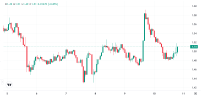
The issuance schedule and lockups were designed to align long-term incentives and avoid sudden supply shocks. For investors tracking the next crypto to explode, understanding vesting timelines and reward emissions is essential when evaluating FIL's potential price dynamics in a bull run.
Filecoin functions as a core storage layer in the broader Web3 stack, complementing smart contract platforms, identity systems, and decentralized frontends. While blockchains like Ethereum store logic and state, Filecoin focuses on the heavier payload of actual data, from images to massive datasets.
This specialization allows developers to build dApps that are end-to-end decentralized, from backend logic to data storage, strengthening the case for FIL as an infrastructure play rather than a purely narrative-driven token. For those asking is crypto dead, Filecoin's ongoing integrations and growth in storage capacity argue the opposite.
During a crypto bull run, capital often rotates from large-cap coins into infrastructure and application tokens with clear utility. Filecoin tends to benefit when attention shifts to real-world use cases such as storage, NFTs, and data-heavy dApps.
Because Filecoin underpins services that users and developers actually need, some traders view FIL as a candidate among the best crypto to buy now when anticipating renewed demand for Web3 infrastructure. However, as with any asset, past performance is not a guarantee of future returns.
No one can predict with certainty which token will be the next crypto to explode, but a few elements work in Filecoin's favor. These include growing real usage, a strong developer ecosystem, and alignment with long-term trends like data growth and decentralized storage.
On the other hand, FIL faces competition from other decentralized storage projects and from entrenched Web2 providers with deep pockets. Thoughtful investors weigh adoption trends, tokenomics, and macro market conditions rather than relying on hype or short-term signals.
The crypto fear and greed index is often used to gauge market sentiment, swinging between extreme fear (capitulation) and extreme greed (euphoria). In fearful periods, infrastructure tokens like FIL can trade at heavy discounts compared with fundamentals, offering potential entries for long-term believers.
During greedy phases, narratives about the best crypto to buy now and bull run crypto can push prices far above sustainable levels. For Filecoin, monitoring sentiment indicators alongside on-chain usage and storage capacity can help distinguish speculative spikes from genuine, utility-driven growth.
Every major bear market revives the question is crypto dead, especially when prices fall sharply and some high-profile projects collapse. Yet infrastructure-focused networks like Filecoin continue to ship upgrades, onboard data, and refine economics even in quiet periods.
The ongoing build-out of decentralized storage, NFTs, and Web3 services on Filecoin suggests that the technology cycle is still progressing beneath the surface of price action. For many, this reinforces the idea that bear phases can be times to research and accumulate carefully, not just times to exit.
Filecoin is not risk-free. The network still competes with centralized giants on reliability, performance, and user experience, and adoption can be slower than early expectations in a highly experimental field.
There are also technical and economic risks: Bugs, regulatory changes, or shifts in token incentives can affect both storage providers and token holders. Anyone viewing FIL as the best cheap crypto to buy now should understand these risks and size positions accordingly rather than overexposing to one bet.
When evaluating FIL, many investors look beyond price charts to metrics such as total storage capacity, active deals, ecosystem projects, and integrations with major platforms. Growth in these metrics can indicate real demand for Filecoin's services, not just speculative interest.
It can also help to compare FIL with other storage tokens on factors like decentralization, track record, and developer traction. This broader perspective makes it easier to decide whether Filecoin fits a portfolio focused on infrastructure, potential next crypto to explode opportunities, or diversified exposure to a future crypto bull run.
To get exposure to Filecoin, people typically use centralized exchanges or DeFi platforms that list FIL. Some advanced users also participate directly in the network by running storage providers, though this requires technical knowledge and meaningful hardware resources.
Before buying, it is wise to clarify time horizon, risk tolerance, and strategy, whether that is long-term holding, active trading, or yield strategies. For many, FIL becomes one part of a broader plan rather than the only asset in a portfolio.
If you want a simpler way to explore tokens like Filecoin during the next crypto bull run, you can follow experienced traders and let their strategies execute automatically. One option is Binance copy trading, where you can mirror top-performing traders' portfolios and risk settings in a few clicks: Binance copy trading.
If you do not have an account yet, you can register through this link to unlock up to 100 USDT in bonuses and start building your strategy around assets like FIL and other bull run crypto candidates: Register on Binance to claim your 100 USDT bonus.
What is Filecoin (FIL) ?
Filecoin is a decentralized cloud storage network that allows users to pay for secure data storage using its native cryptocurrency, FIL. Instead of relying on a single company like Amazon or Google, Filecoin connects thousands of independent storage providers around the world into one open marketplace.
The project was created by Protocol Labs, the team behind IPFS (InterPlanetary File System), and uses a blockchain to coordinate storage, payments, and cryptographic proofs that data is being stored correctly over time. FIL is the token used to pay for storage and retrieval, reward miners, and secure the network.
Why Filecoin was created
Traditional cloud storage is controlled by a few centralized providers, which creates risks around censorship, data loss, single points of failure, and pricing power. Filecoin's goal is to build an open, permissionless storage layer for the internet where anyone can offer storage or rent it, with transparent rules and cryptographic guarantees.
By turning storage into an open market, Filecoin aims to drive prices down, improve redundancy, and give users real control over where and how their data is stored. This mission ties directly into Web3 values and is one reason many investors consider FIL when looking for the next crypto to explode in real-world utility.
How the Filecoin network works
On Filecoin, users upload data and specify how long they want it stored, while storage providers commit disk space and compete to offer the best price and reliability. The blockchain logs storage deals and enforces them through cryptographic proofs, ensuring that providers keep data as promised.
There are two main roles in the network: Storage miners, who store data and earn FIL, and retrieval miners or providers, who specialize in delivering data quickly to users. Both roles are incentivized with block rewards, fees, and deal payments in FIL.
Proof-of-Replication and Proof-of-Spacetime
Filecoin introduces two key innovations: Proof-of-replication and proof-of-spacetime. Proof-of-replication shows that a miner has created a unique copy of a client's data, not just pointing to an existing file, while proof-of-spacetime shows the data is being stored continuously over an agreed period.
Miners regularly submit these proofs to the blockchain, and if they fail to do so, they risk losing collateral and future rewards. This design makes storage a verifiable, on-chain service rather than a promise that cannot be checked, which is critical if you view FIL as one of the best crypto to buy now for real utility.
What FIL is used for
FIL is more than a speculative asset; it is the core economic fuel of the Filecoin network. Users spend FIL to pay for storage, retrieval, and other services, while miners earn FIL for providing reliable storage capacity and maintaining the blockchain.
FIL also plays a role in governance and security, as miners must lock tokens as collateral to participate, aligning their incentives with long-term network health. This closed-loop economic model is a key reason some investors watch FIL closely during each crypto bull run.
Real-world use cases
Filecoin supports a broad range of use cases where permanent or long-term storage is crucial.common examples include backups of web content, large datasets, archives, and decentralized applications that need censorship-resistant infrastructure.
One high-growth segment is NFTs, where the visual or media files are too large to store directly on a blockchain. Filecoin is widely used alongside IPFS to store underlying NFT assets, with marketplaces leveraging it for durable storage behind ownership certificates traded on-chain.
Key features that set Filecoin apart
Verifiable storage is one of Filecoin's standout features. Clients can independently check on-chain proofs to confirm that their data is still being stored according to the original deal, without trusting a single company's internal logs.
The open market model means prices and performance are determined by competition among global providers, not a single centralized provider. This can result in lower costs, flexible redundancy, and better geographic distribution of data, making FIL interesting to those looking for the best cheap crypto to buy now with strong fundamentals.
Filecoin vs centralized cloud storage
Below is a simple table to highlight how Filecoin compares with traditional providers like AWS, Google Cloud, or Azure on core aspects that matter to both developers and investors.
| Aspect | Filecoin (FIL) | Centralized cloud providers |
|---|---|---|
| Control | Open, decentralized network of independent storage providers | Single corporate entity controls infrastructure |
| Censorship resistance | Higher, no single point of control | Lower, content can be blocked by provider |
| Pricing | Market-driven by supply and demand | Provider sets prices and discounts |
| Verifiability | On-chain cryptographic proofs of storage | Trust-based, internal audits only |
| Token incentives | FIL rewards for miners and participants | No native token incentives for users |
Tokenomics and supply
FIL has a capped maximum supply, with tokens released over time through mining rewards, investor allocations, and ecosystem incentives. A significant portion is distributed to storage providers and network participants to grow capacity and usage, while some was allocated to early backers and the development team.
The issuance schedule and lockups were designed to align long-term incentives and avoid sudden supply shocks. For investors tracking the next crypto to explode, understanding vesting timelines and reward emissions is essential when evaluating FIL's potential price dynamics in a bull run.
How Filecoin fits into Web3
Filecoin functions as a core storage layer in the broader Web3 stack, complementing smart contract platforms, identity systems, and decentralized frontends. While blockchains like Ethereum store logic and state, Filecoin focuses on the heavier payload of actual data, from images to massive datasets.
This specialization allows developers to build dApps that are end-to-end decentralized, from backend logic to data storage, strengthening the case for FIL as an infrastructure play rather than a purely narrative-driven token. For those asking is crypto dead, Filecoin's ongoing integrations and growth in storage capacity argue the opposite.
Filecoin in a crypto bull run
During a crypto bull run, capital often rotates from large-cap coins into infrastructure and application tokens with clear utility. Filecoin tends to benefit when attention shifts to real-world use cases such as storage, NFTs, and data-heavy dApps.
Because Filecoin underpins services that users and developers actually need, some traders view FIL as a candidate among the best crypto to buy now when anticipating renewed demand for Web3 infrastructure. However, as with any asset, past performance is not a guarantee of future returns.
Is FIL the next crypto to explode?
No one can predict with certainty which token will be the next crypto to explode, but a few elements work in Filecoin's favor. These include growing real usage, a strong developer ecosystem, and alignment with long-term trends like data growth and decentralized storage.
On the other hand, FIL faces competition from other decentralized storage projects and from entrenched Web2 providers with deep pockets. Thoughtful investors weigh adoption trends, tokenomics, and macro market conditions rather than relying on hype or short-term signals.
Filecoin and the fear and greed cycle
The crypto fear and greed index is often used to gauge market sentiment, swinging between extreme fear (capitulation) and extreme greed (euphoria). In fearful periods, infrastructure tokens like FIL can trade at heavy discounts compared with fundamentals, offering potential entries for long-term believers.
During greedy phases, narratives about the best crypto to buy now and bull run crypto can push prices far above sustainable levels. For Filecoin, monitoring sentiment indicators alongside on-chain usage and storage capacity can help distinguish speculative spikes from genuine, utility-driven growth.
Is crypto dead? What Filecoin suggests
Every major bear market revives the question is crypto dead, especially when prices fall sharply and some high-profile projects collapse. Yet infrastructure-focused networks like Filecoin continue to ship upgrades, onboard data, and refine economics even in quiet periods.
The ongoing build-out of decentralized storage, NFTs, and Web3 services on Filecoin suggests that the technology cycle is still progressing beneath the surface of price action. For many, this reinforces the idea that bear phases can be times to research and accumulate carefully, not just times to exit.
Risks and challenges to consider
Filecoin is not risk-free. The network still competes with centralized giants on reliability, performance, and user experience, and adoption can be slower than early expectations in a highly experimental field.
There are also technical and economic risks: Bugs, regulatory changes, or shifts in token incentives can affect both storage providers and token holders. Anyone viewing FIL as the best cheap crypto to buy now should understand these risks and size positions accordingly rather than overexposing to one bet.
How to evaluate FIL as an investment
When evaluating FIL, many investors look beyond price charts to metrics such as total storage capacity, active deals, ecosystem projects, and integrations with major platforms. Growth in these metrics can indicate real demand for Filecoin's services, not just speculative interest.
It can also help to compare FIL with other storage tokens on factors like decentralization, track record, and developer traction. This broader perspective makes it easier to decide whether Filecoin fits a portfolio focused on infrastructure, potential next crypto to explode opportunities, or diversified exposure to a future crypto bull run.
How and where to get involved
To get exposure to Filecoin, people typically use centralized exchanges or DeFi platforms that list FIL. Some advanced users also participate directly in the network by running storage providers, though this requires technical knowledge and meaningful hardware resources.
Before buying, it is wise to clarify time horizon, risk tolerance, and strategy, whether that is long-term holding, active trading, or yield strategies. For many, FIL becomes one part of a broader plan rather than the only asset in a portfolio.
Take your next step with Filecoin
If you want a simpler way to explore tokens like Filecoin during the next crypto bull run, you can follow experienced traders and let their strategies execute automatically. One option is Binance copy trading, where you can mirror top-performing traders' portfolios and risk settings in a few clicks: Binance copy trading.
If you do not have an account yet, you can register through this link to unlock up to 100 USDT in bonuses and start building your strategy around assets like FIL and other bull run crypto candidates: Register on Binance to claim your 100 USDT bonus.


